
The power of financial leverage, part one
Two investors, a hundred thousand pounds each, and two different answers to what to do with it. The arithmetic is the easy part. The risk is the part worth reading.
In property investment, leverage is a tool that can multiply what your money does. Drawing on my own experience and that of my business partner Wendy, here is why financial leverage matters for anyone building a property portfolio. Leverage comes in several forms: people, finance, systems and processes, and now AI. This piece is about the financial kind. It compares two investors, both with £100,000. One buys a single property outright with cash. The other uses the same money as a deposit on four.
Why financial leverage matters
- More buying power. Leverage lets you acquire more property than cash alone would. That spreads risk across more than one asset.
- More work out of the same money. A small movement in value does a lot more when the investment is leveraged.
- Tax treatment. Held in a company, mortgage interest is generally deductible, which lowers the tax bill and helps cashflow.
- A hedge against inflation. Property tends to appreciate over time, and you repay the loan with money that buys less than it did when you borrowed it.
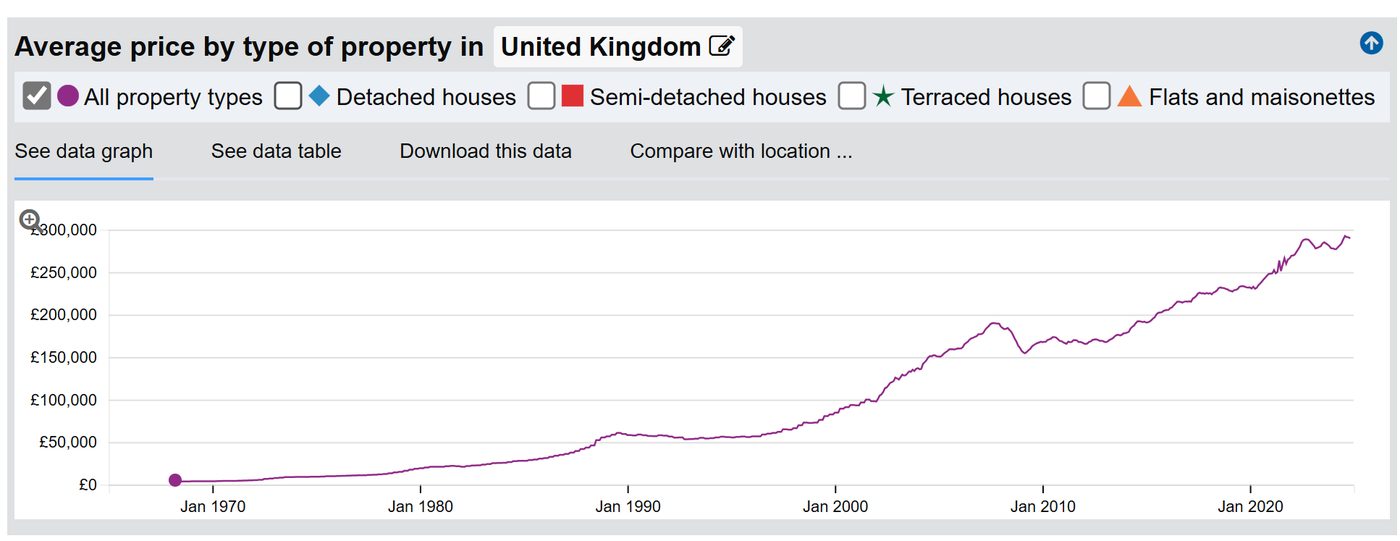
Cash against leverage
Take two investors, John and Oliver, both with £100,000 to put into UK property.
John buys with cash
John buys a single property outright for £100,000. No mortgage, no debt, no monthly obligation to anybody. It’s the simplest version and it carries the least risk.
Oliver uses leverage
Oliver uses his £100,000 as a 25% deposit across four properties, each worth £100,000, and mortgages the remaining 75% on each. He now controls £400,000 of property on the same £100,000.
Side by side
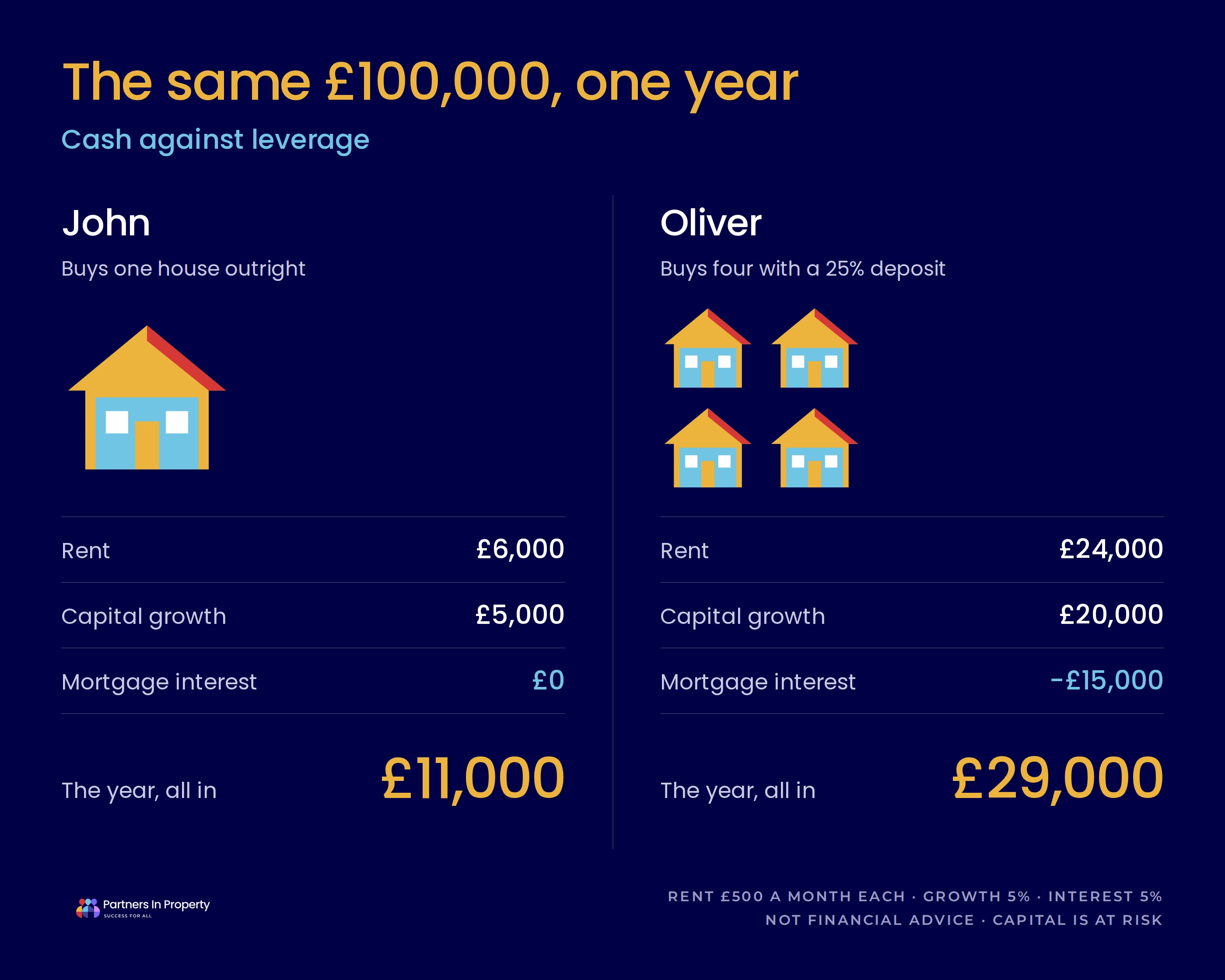
Assume each property rents for £500 a month, values rise 5% in the year, and the mortgages carry interest at 5%.
- Rent. John takes £6,000 a year. Oliver takes £24,000, being four properties at £6,000 each.
- Capital growth. John gains £5,000. Oliver gains £20,000, being £5,000 on each of four.
- Mortgage interest. John pays none. Oliver pays £15,000, being 5% of £300,000.
- The year, all in. John: £6,000 and £5,000, so £11,000. Oliver: £24,000 and £20,000 less £15,000, so £29,000.
Risk, and the part people skip
Oliver’s position produces a great deal more in a good year. It also carries a great deal more risk. If values fall or the rent stops coming in, his obligations do not move. The mortgage is still due. That’s the trade, and it’s the whole trade: leverage multiplies what happens, in both directions. Careful planning and honest risk management are what make the difference, and neither is optional.
The point
Leverage is a tool, and like any tool it’s neutral about the outcome. Used with planning behind it, it lets an investor build something larger and more spread out than cash alone would reach. Used without, it magnifies a bad decision just as efficiently as a good one.
First published by Sara Cromie on LinkedIn. Brought across here so it outlives the feed. Nothing in it is financial advice, and capital is always at risk.