
Cashflow or chunks of cash
Location isn’t the first question. The first question is what you want the money to do, and most people answer it by accident.
Investing in property can be a rewarding journey, but before you commit to your next purchase, there’s something you need to settle first. Contrary to popular belief, location isn’t everything. While it matters, the key to a good property investment lies in understanding the outcome you want and the strategy to get there. As Stephen Covey put it: start with the end in mind.
The first decision
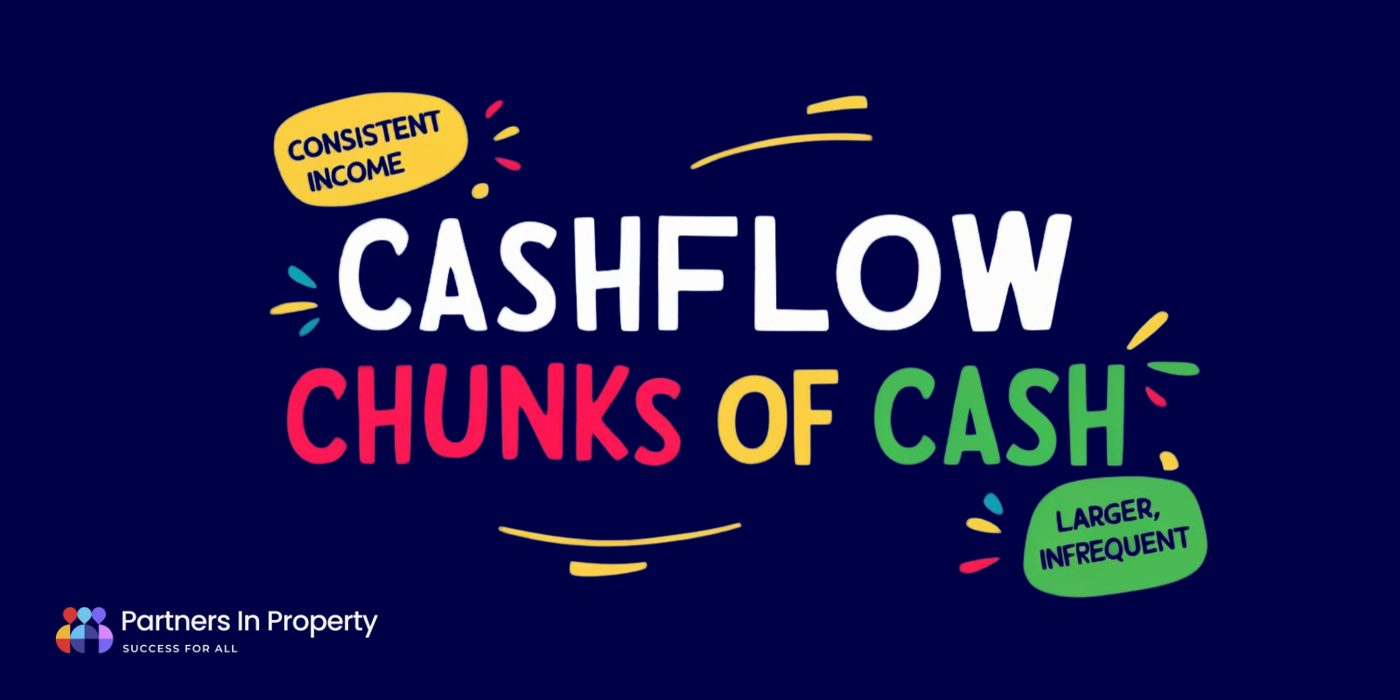
The first decision is whether you want steady cashflow or large chunks of cash. That choice shapes the strategy and in the end it decides how this goes. The two work differently:
- Cashflow. A consistent income from the property, usually through rent. A good way to build a steady stream over time.
- Chunks of cash. Larger, less frequent profits, through flipping or selling after the value has moved.
When I first started investing in property I only knew of buying and holding until the market went up. That ran me out of money to invest with. My business partner Wendy and I now find deals everywhere, and we’re quick to work out whether a deal meets what we need from it.
First-time strategies
Depending on your knowledge and experience, these are the ones to weigh up.
Short-term profit, manufactured growth
Buying property that needs renovation, improving it, and selling it on. A hands-on approach that can turn around quickly.
Wealth building, long-term
Buying property that appreciates over time. This one asks for patience and a long view.
High cashflow
Property that generates strong rent. Multi-unit buildings, or anywhere the rental demand is genuinely there.
Below market value
Buying under what a property is worth gives you equity on day one and more room in the deal.
More advanced strategies
For investors with more experience behind them, these open doors the standard route doesn’t.
- Control now, pay later. Controlling a property without paying for all of it up front, usually through an option or a lease agreement.
- Bridging. Short-term finance to buy quickly, often used on a flip or where speed is the whole point.
- HMOs. Converting a property and letting it by the room, which changes the income substantially.
- Holiday lets. Seasonal income, which can be strong in the right place and thin in the wrong one.
- Serviced accommodation. Short-term furnished letting aimed at business travellers and visitors, which usually pays better than a standard tenancy and asks more of you.
- Charity and corporate leases. Letting to an organisation rather than an individual, which tends to be steadier and lighter on management.
Before you buy
Take a moment on your goals. Are you after steady cashflow, or a lump sum at the end of it? Your answer shapes the strategy, and it lets you make the rest of the decisions properly rather than one at a time in the dark.
First published by Sara Cromie on LinkedIn. Brought across here so it outlives the feed. Nothing in it is financial advice, and capital is always at risk.